
The Thinking Behind IWC’s Most Complex Timepieces
IWC Schaffhausen ProSet and Four Decades of Perpetual Calendar Innovation
In an exclusive interview with Bucherer, IWC Schaffhausen's Senior Expert Innovation Lorenz Brunner traces the evolution of the brand's perpetual calendars, from Kurt Klaus's groundbreaking invention to the new ProSet system, revealing the engineering decisions behind the latest chapter in this 40-year history.
5 Minutes

With the introduction of the Perpetual Calendar ProSet in 2026, IWC Schaffhausen has made one of watchmaking's most complex complications exceptionally straightforward to adjust. For the first time in the brand's history, a fully synchronised perpetual calendar can be set forwards or backwards through the crown, without separate correctors or complicated setting procedures. The apparent simplicity conceals an entirely new mechanical construction, developed over approximately ten years.
The story of ProSet stretches back to the mid-1980s, when IWC watchmaker Kurt Klaus introduced a perpetual calendar that transformed how owners interacted with the complication. His invention would influence the manufacture's calendar development for four decades, through increasingly sophisticated displays and mechanisms. ProSet marks the latest chapter in that history, preserving Klaus's emphasis on ease of use while fundamentally reconsidering the engineering behind it.
The Kurt Klaus Revolution
In 1985, when the Swiss watch industry was still grappling with the effects of the quartz crisis, IWC introduced the Da Vinci Perpetual Calendar Chronograph Ref. 3750. Developed by Klaus, its clever calendar mechanism offered a practical solution to one of mechanical watchmaking's most demanding complications. Traditionally, perpetual calendars required individual correctors to adjust their various indications. Klaus devised a fully synchronised system that allowed the calendar to be advanced using the crown alone.
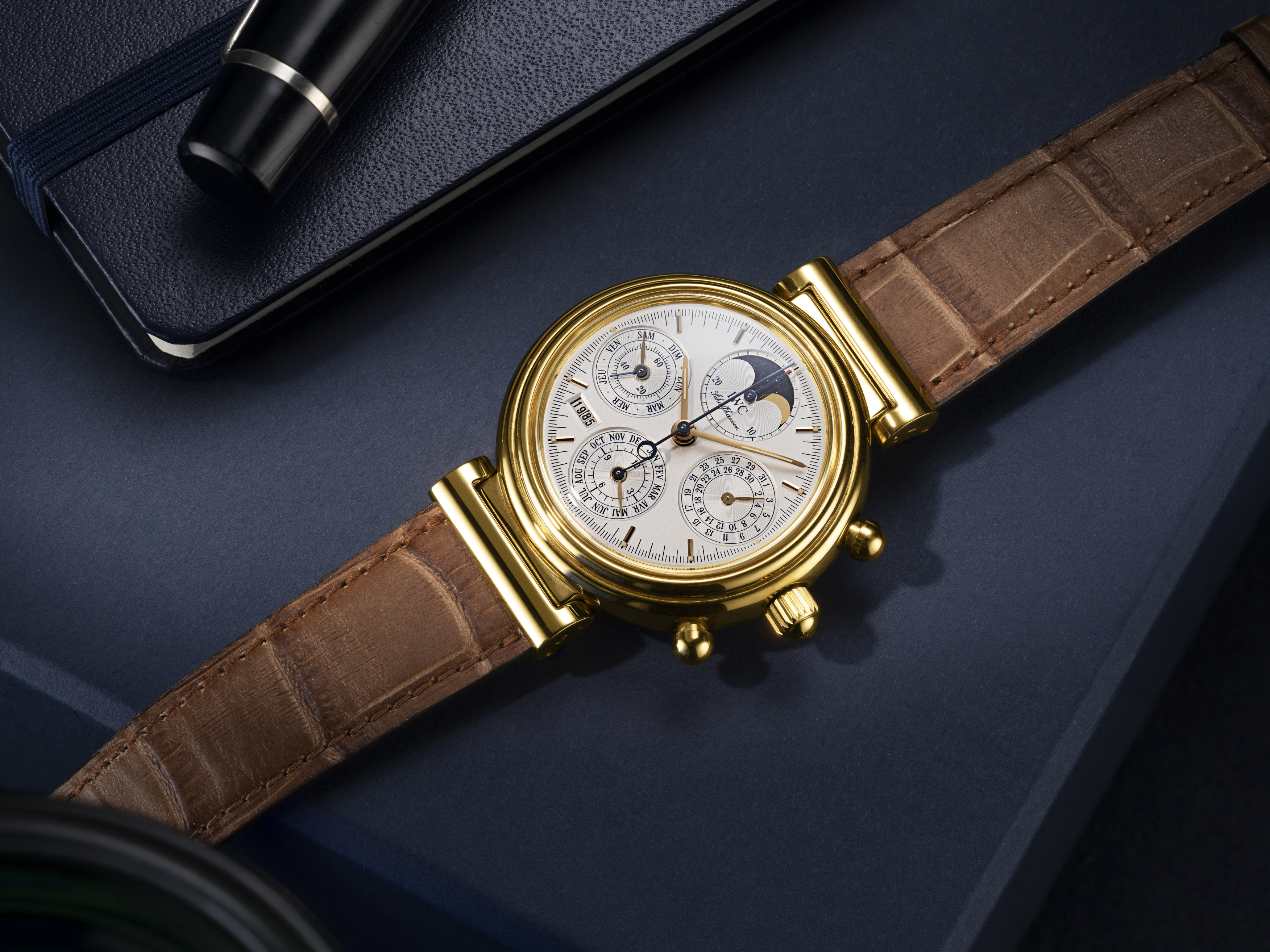
He had set out to create a modular mechanism that could be integrated into different base movements. “Klaus's perpetual calendar was remarkably simple, comprising just 81 individual components,” explains Lorenz Brunner. “Its fully synchronised design and intuitive operation fundamentally shaped the nature of this complication.” Despite its mechanical economy, the calendar automatically accounted for months of different lengths and leap years, while a four-digit year display provided an unusually comprehensive indication of the date.
The Da Vinci became an important milestone in IWC's history, demonstrating the continued relevance of sophisticated mechanical watchmaking at a time when quartz technology had transformed the industry. Klaus's design would remain central to the manufacture's perpetual calendars for decades, providing the foundation for further technical developments.
Four Decades of Calendar Innovation
Over the decades, IWC continued to develop its perpetual calendar complications, introducing several technical innovations along the way.
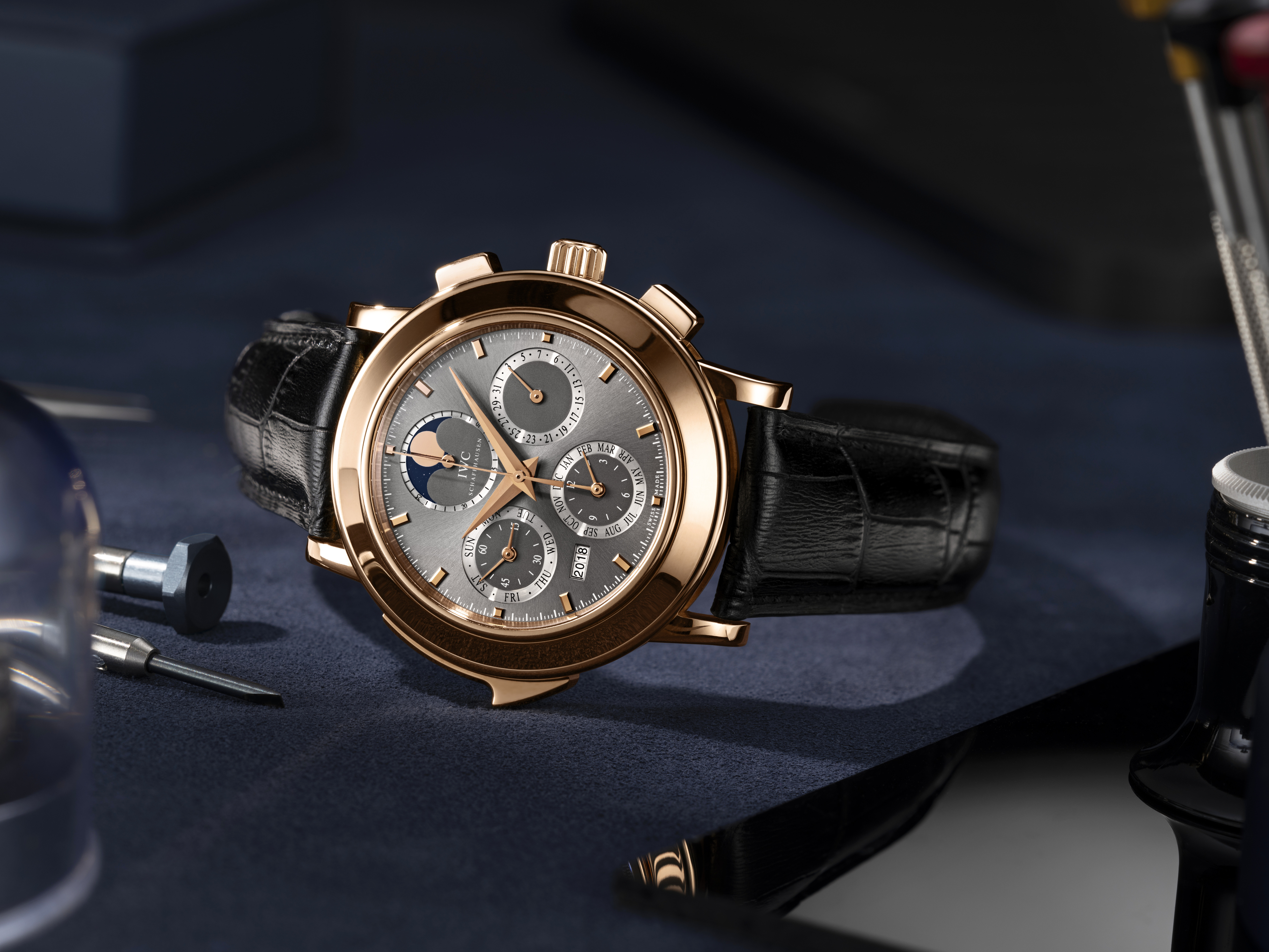
In 1990, IWC took its expertise in complicated watchmaking considerably further with the Grande Complication Ref. 3770, the manufacture’s first wristwatch with a grand complication. Building on Klaus’s perpetual calendar, the automatic Calibre 79091 brought together a chronograph, a perpetual calendar with a four-digit year display, and a minute repeater developed in collaboration with watchmakers Dominique Renaud and Giulio Papi.
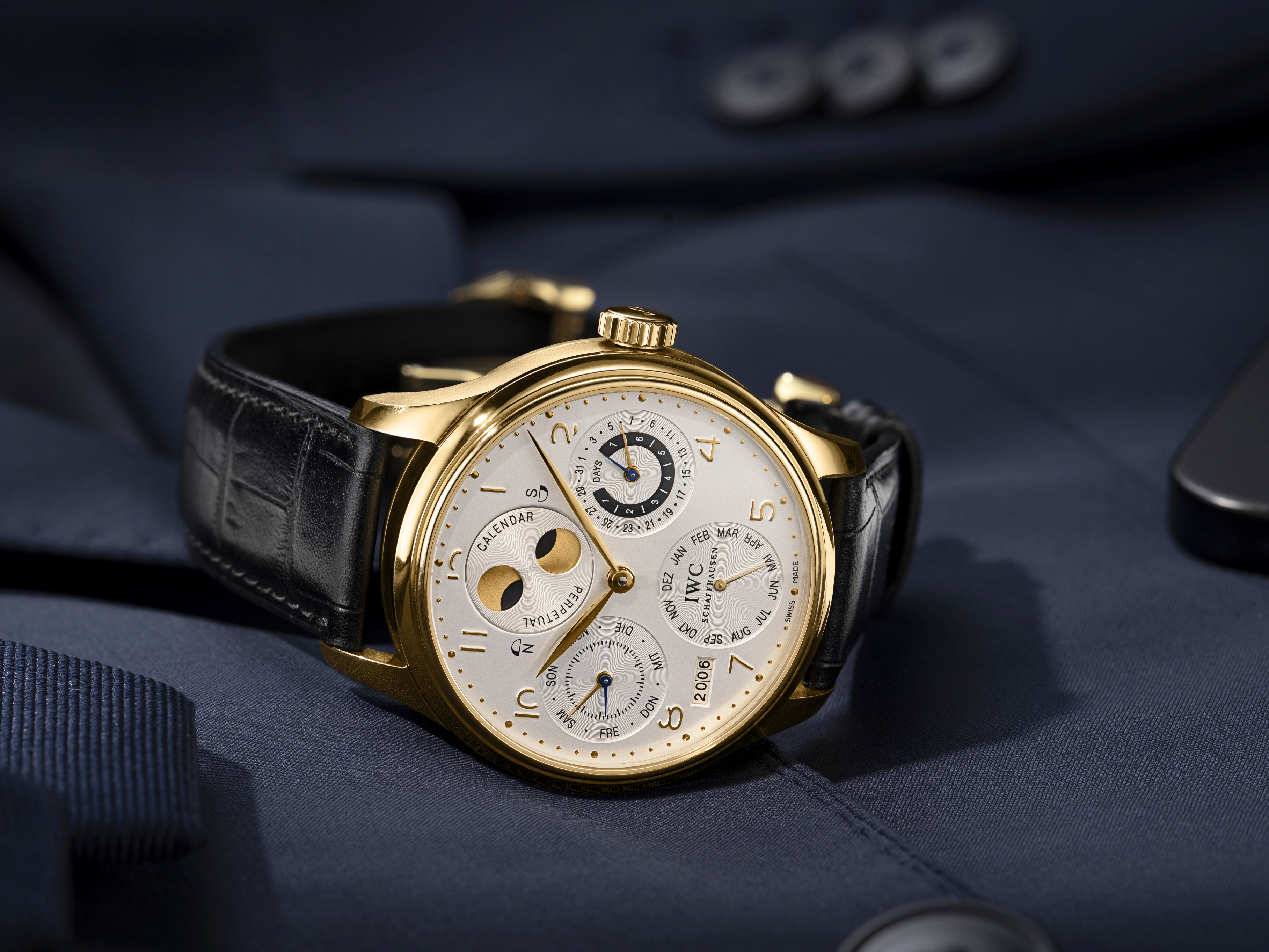
In 2003, the Portugieser Perpetual Calendar Ref. 5021 introduced the Double Moon display, depicting the phases of the moon as seen from both the northern and southern hemispheres. A revised reduction gear also improved the moon-phase accuracy to a deviation of just one day in 577.5 years, a considerable advance over the original mechanism's 122 years.
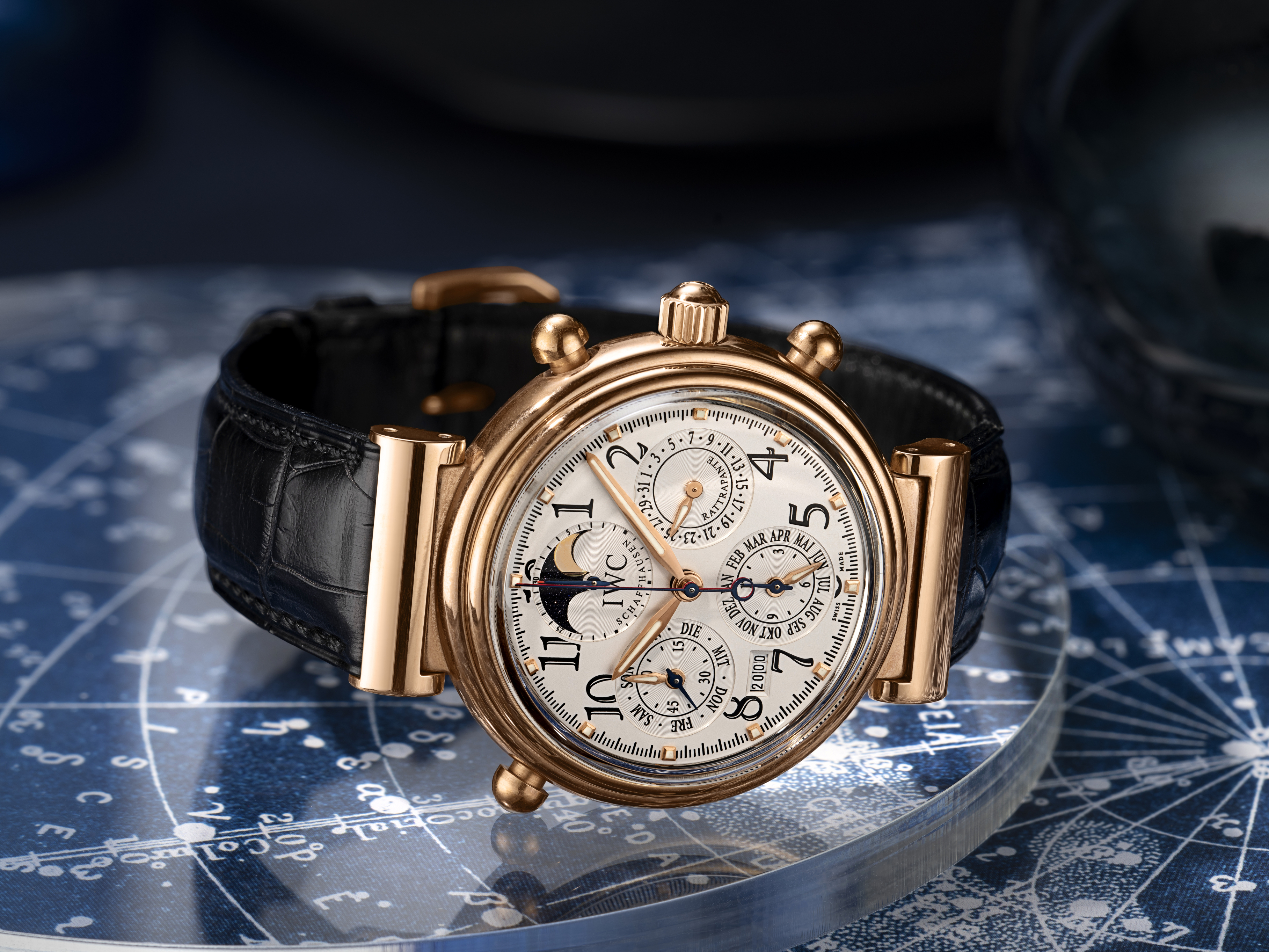
In 2004, IWC revisited the original Da Vinci Perpetual Calendar Chronograph with the Ref. 3758. The updated design introduced a larger 41.5mm case, replaced Plexiglas with sapphire crystal, and added Arabic numerals and wider hands to the dial.
In 2009, IWC took a different direction with the Da Vinci Perpetual Calendar Digital Date-Month, replacing conventional date and month indications with large jumping numerals displayed through apertures. This required an inventive switching mechanism that accumulated energy in a spring and released it when multiple calendar discs needed to advance simultaneously. Klaus also played a pivotal role in developing this technically ambitious model, illustrating his continued influence on IWC's calendar watchmaking.
Another significant milestone arrived in 2024 with the Portugieser Eternal Calendar, IWC's first secular perpetual calendar. Conventional perpetual calendars require manual correction in century years that are not leap years, such as 2100, 2200, and 2300. The Eternal Calendar addresses these exceptions through an additional mechanism comprising just eight components, including a wheel that completes one revolution every 400 years. Its moon-phase display achieved a theoretical accuracy of more than 45 million years, earning Guinness World Records recognition. The watch also received the Aiguille d'Or, the highest honour at the 2024 Grand Prix d'Horlogerie de Genève.
A Decade of Engineering Behind ProSet
For all its achievements, Klaus's original calendar had one small limitation: its indications could only be adjusted forwards. If the owner accidentally advanced the calendar beyond the correct date, there was no way to reverse it. The owner would then have to let the movement run down and wait until the actual date caught up with the displayed indications.
“At IWC, however, we pursue an engineering philosophy that can sometimes border on the obsessive: we believe that every mechanism can always be improved a little further,” notes Brunner. That determination led to the development of the Perpetual Calendar ProSet, a project that would occupy IWC's engineers for about a decade.
Initially, the team hoped to build upon Klaus's existing mechanism. As Lorenz Brunner reveals, this proved impossible. “Over time, it became clear that an entirely new construction would be necessary to allow adjustment in both directions.” The challenge stemmed from the original calendar's combination of gears, levers, and springs, particularly the lever responsible for advancing the indications at the end of shorter months.
Watchmaker and engineer Samuel Vuillemez played a central role in developing the new system, establishing the foundations of an entirely gear-based architecture. Brunner places him in the same engineering tradition as Albert Pellaton, IWC's former technical director, and Klaus.
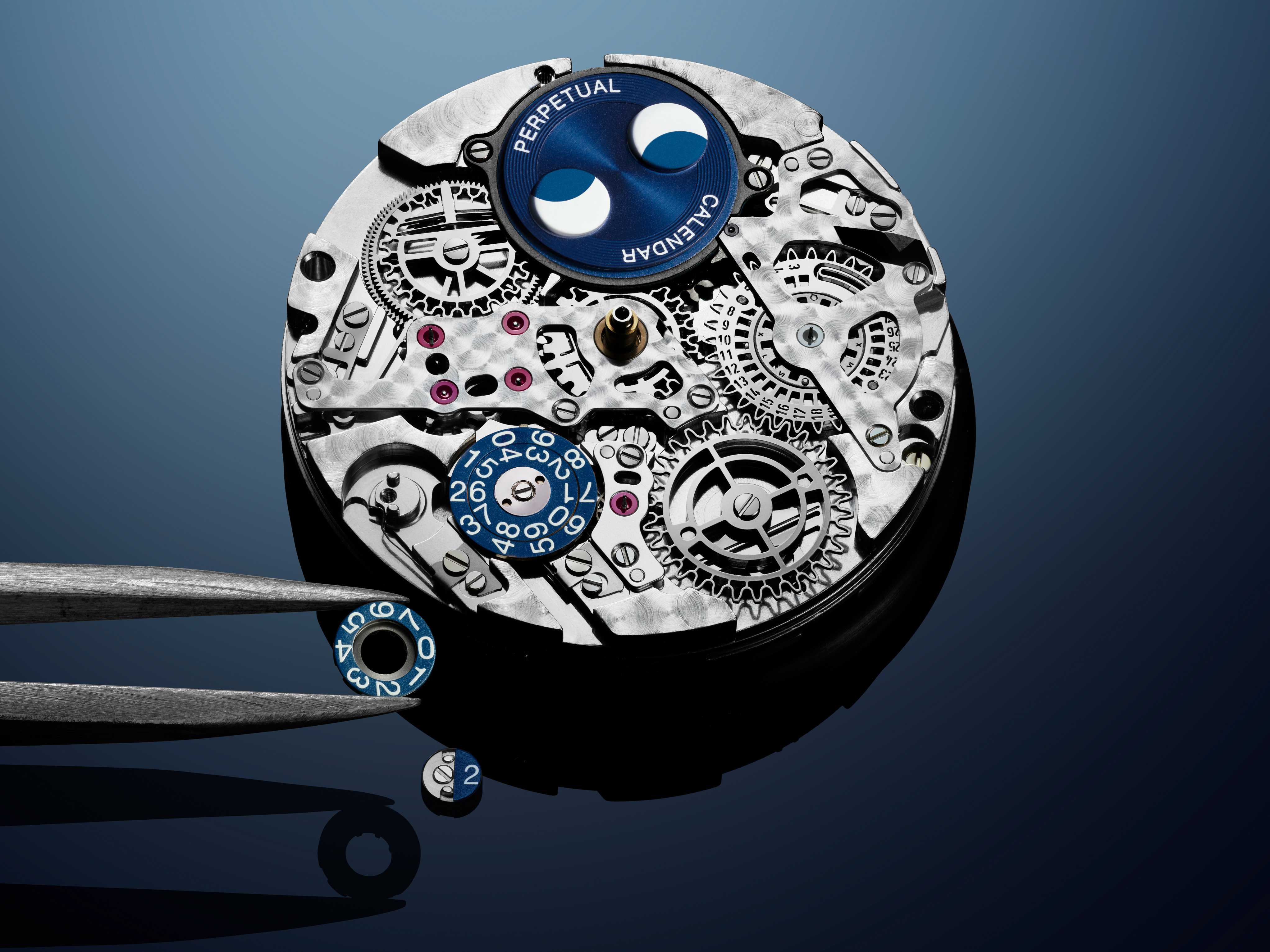
Instead of relying on the original lever arrangement, ProSet uses precisely engineered wheels with flexible fingers that extend or retract according to the lengths of the months and the leap-year cycle. This allows the calendar to advance correctly through shorter months while also making it possible to adjust the indications backwards.
“Manufacturing these parts to the required precision would not have been possible using the conventional turning and milling techniques available in Klaus's day,” Brunner explains. The solution was the LIGA process, a micro-structuring technique based on lithography and electroplating, also used in the semiconductor industry. It enables the production of exceptionally intricate components with multiple functional layers integrated into a single part.
According to Brunner, the ProSet mechanism is protected by five patents, including one covering the quick-correction function that allows the calendar to be adjusted forwards or backwards in precise daily steps. Despite the complexity of the engineering behind it, the result is remarkably straightforward for the wearer. As Brunner puts it, “Setting the Perpetual Calendar ProSet is therefore as simple and intuitive as setting the time.”
The Next Chapter
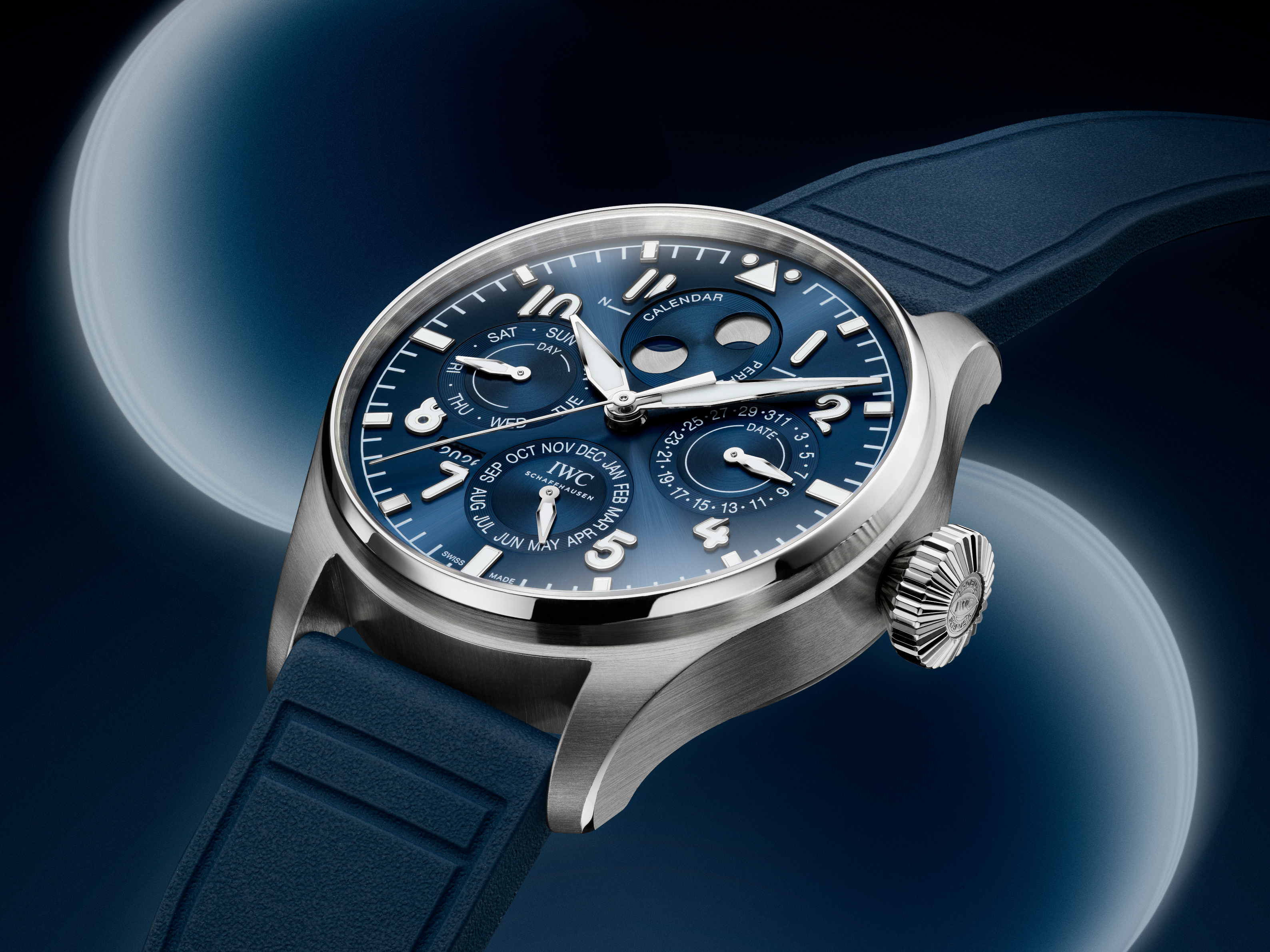
The Perpetual Calendar ProSet made its debut in 2026 in three versions of the Big Pilot's Watch, with cases in stainless steel, white ceramic, and 18-carat gold. All three are powered by IWC's manufacture calibre 82665, which incorporates the new calendar mechanism alongside a Double Moon display accurate to one day's deviation in 1,044 years.
Importantly, the introduction of ProSet does not signal the end of Klaus's original mechanism. “Both Klaus's perpetual calendar and the new Perpetual Calendar ProSet have an established place in our collection today,” Brunner points out. The two systems represent different generations of IWC engineering, each with its own significance in the manufacture's history.
Although IWC has yet to reveal how widely ProSet might be adopted, Brunner confirms that its modern architecture creates new opportunities for the future development of perpetual calendars at IWC.

