Atelier
C Is for Character
Tobias Lanz began his career at Bucherer Fine Jewellery nearly three decades ago, following an apprenticeship as a goldsmith. Over the years, he cultivated his expertise across various areas of the Maison, during which time he also earned his gemmology and diamond grading certifications. Today, his word is the final one when it comes to which diamonds make the cut (pun very much intended) and ultimately find their way into Bucherer Fine Jewellery’s esteemed ateliers.
Portrait by Ivo Müller.
Q: When sourcing a diamond, what qualities do you look for?
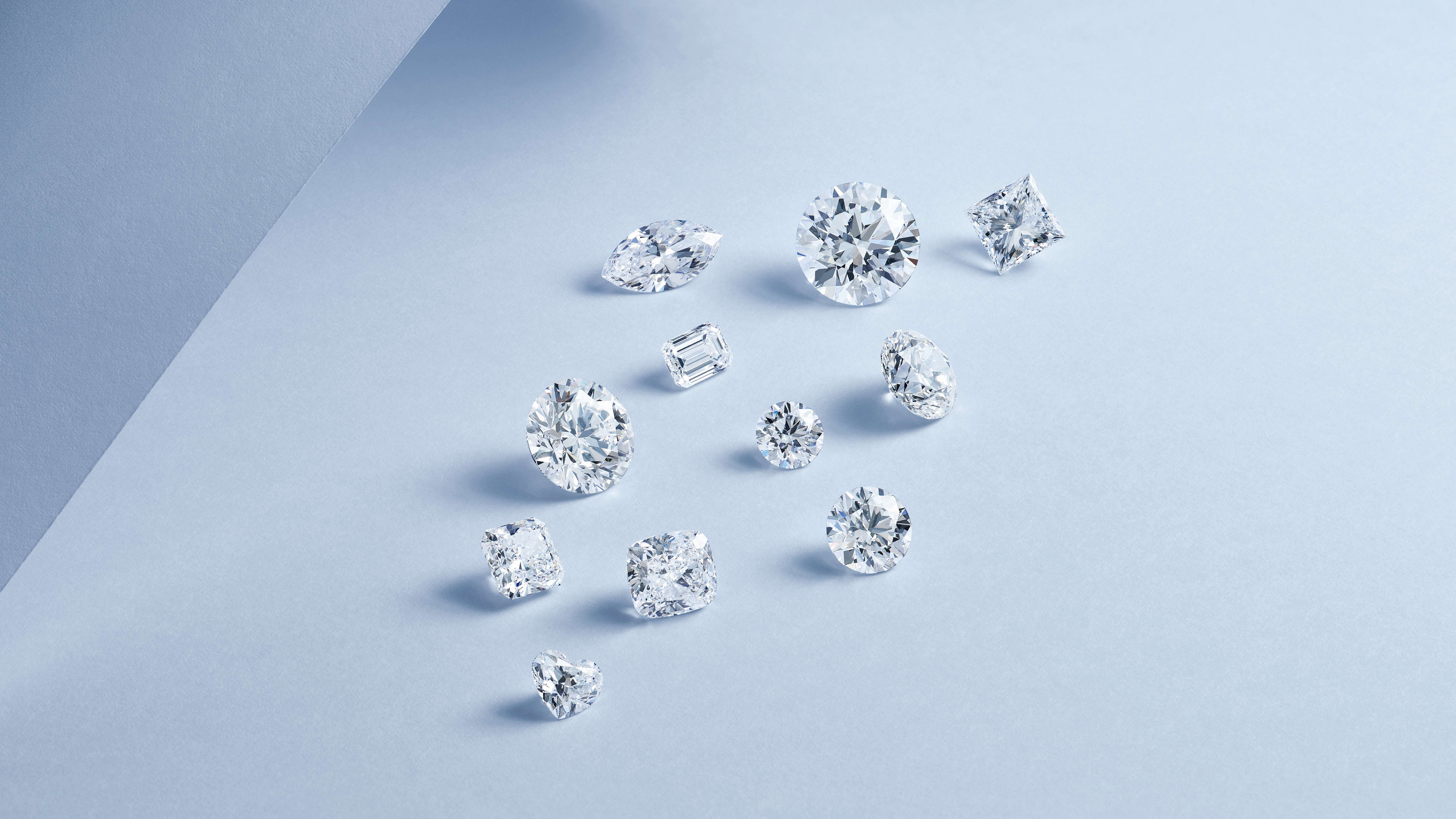
A: Of the 4Cs, cut quality is perhaps the most important to assess, as it’s something you can judge with the naked eye. It’s also the only “C” that is man-made. The importance of cut is something we try to instil in both our sales staff and our clients.
The truth is, when it comes to clarity, it’s very difficult to spot the difference between a Flawless and a VVS, or between a VS1 and a VVS2 unassisted. The same goes for colour—the difference is only immediately apparent when comparing a D to an F or G. And yet, the price difference between a D and E, or between Flawless and VVS1, can be significant—20 to 30%.
However, when it comes to cut, the difference between a Triple-Excellent Cut and, say, a Very Good or Good Cut is immediately obvious. Regardless of clarity or colour, the way a stone is cut can change everything. Then again, if we’re talking about coloured diamonds…
Q: Yes?
A: Cut is secondary.
Q: Let me guess: to colour?
A: Exactly, and the GIA grades that colour on a different scale. Take fancy coloured diamonds. Let’s say yellow diamonds. The impression and intensity of the colour are everything. Is there a brownish overtone? Is there not a brownish overtone? Personally, I prefer greenish-blue diamonds—like an ocean blue or a Paraiba blue.
Cut considerations for coloured diamonds aren’t as exacting as they are for white diamonds, which are actually colourless diamonds, by the way. With white diamonds, the goal is to create a light reflection as quickly as possible.
With fancy coloured diamonds, it’s the opposite: you want to keep the light inside the stone to intensify the colour.
With coloured stones, it’s more instinctual. You either like the colour or you don’t. But no matter what kind of diamond you’re dealing with, what’s on paper only tells part of the story.
Regardless of clarity or colour, the way a stone is cut can change everything.

Q: So, how does one get the full story?
A: In the end, you need to see it. And even then, a diamond’s visual performance can depend on external factors like geographic location or the time of day, as it relates to the position and angle of the sun. There are also aspects of grading that are, to some extent, subjective, especially with stones that are “borderline” in some category. Where exactly is the line between a G and an F colour grade? It doesn’t objectively exist. A human being decides, and human beings can disagree.
Here’s another example: if you take the diameter of the table (the top of the diamond) and its depth (or height), those two measurements help determine whether a stone receives an Excellent Cut grade. So, if you have a very small table and a similarly deep depth, the combination of those two extremes might technically result in an Excellent.
But at Bucherer, we don’t accept diamonds with very small tables or very deep depths. I’m telling you all of this because it’s so important to understand that just because a stone looks good online, or according to its documentation, doesn’t mean it will be as impressive in person. I’m not being romantic. It’s just a fact.
Q: I was about to say, it can be easy to romanticise diamond sourcing as a secretive, exclusive, or even opaque business. But what does diamond sourcing actually look like in 2025?
A: Today, you can open up your laptop and dive into the life of a diamond. There are even 3D animations of stones. But all this really does is help us filter out diamonds that don’t meet our baseline quality standards.
At the end of the day, it’s a really, really small business. For many years, we’ve worked with an exclusive set of suppliers. We keep the list short, but highly selective. We bypass middlemen and buy directly from the diamond cutters, getting as close to the mine as possible. Because they have known us for years, they never offer us stones that fall short of our strict guidelines before we step in to give our final approval. Can I tell you a great story?
Q: Absolutely.
A: So, Mauro and I—Mauro is the Leading Diamond Buyer on my team—once joined the Diamond Club of Antwerp because we wanted to get as deep as we could into the business of diamond dealers.
It’s important to note: there are no buyers in the Diamond Club of Antwerp. There are only dealers. The club exists mainly to raise the alarm with respect to any “cheaters” or fake GIA certificates, and to discuss other pressing industry issues. We want to be best in class.
Q: So, did you manage to get accepted?
A: Yes! We had to travel to Antwerp after sending thorough documentation, including background checks. We also needed to provide three letters of recommendation from different sources. When we arrived, we were invited into the historic halls of the Bourse of Antwerp. We sat at an old wooden table with four of the directors on one side, Mauro and I on the other, and they asked us why we were joining the club. It was like a movie. After we were tentatively accepted, we still had to wait about eight months for the final decision. During that time, they sent our names, photos, and histories to diamond dealers around the world so that, if someone wanted to, they could reject us. It was incredible to see the level of care invested in that decision.
Q: In your estimation, what makes a diamond a Bucherer diamond?
A: We’re always looking for la crème de la crème, but sometimes that cream is thicker than you think! I’ll explain it in a different way. If the maximum score on a test is 100 points, and the students with 90 points or more are getting the best note, the student with 100 points is still better than the student with 90 points, but they got the same note. So our Excellent is sometimes better than other Excellents.
That being said, I took over this part of the company from someone else, who took it over from someone else, and so on and so forth, all the way back to 1888. And from the very beginning, it’s been about a personal feeling. Even if you have all the technical information, you need to have the stone in your hands, on your table, to make the final decision. Even if it’s a Triple-Excellent, a D colour, an IF clarity, there could still be something I don’t like… maybe a milky or dusty impression, or something you can’t mark or describe on the certificate plots. No matter how perfect a stone is on paper, it may not have life. It may not have character.
Q: Maybe that’s the 5th C: character?
A: Yes. Yes, you could say that.

The 4Cs
Developed by the GIA, the 4Cs are the universal standard for assessing diamond quality.