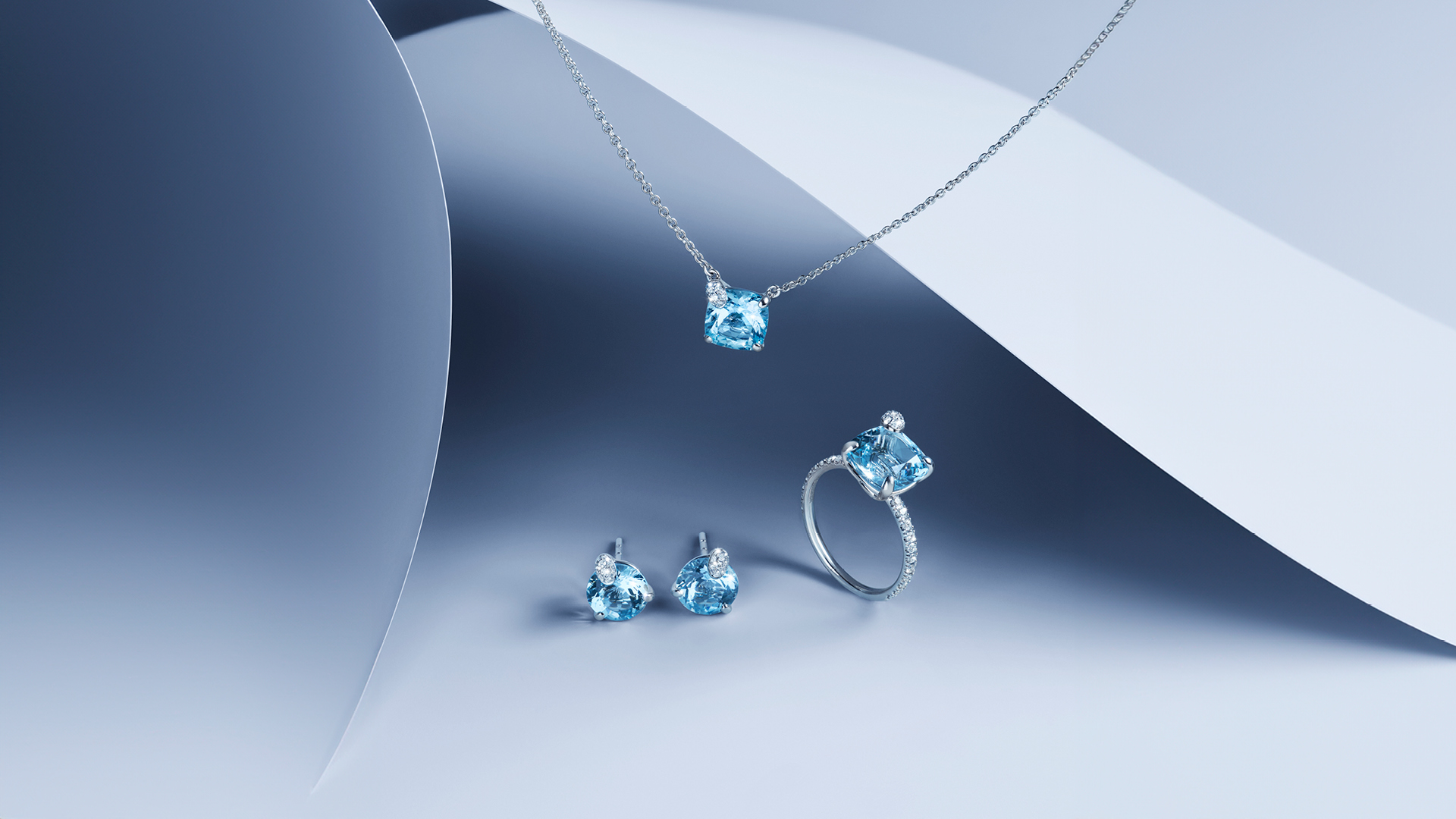
The Magic of Gemstones
Gemstones have captivated people since their discovery thousands of years ago with their beauty and vibrant colours. Clear gemstones are rare, making them very precious and highly sought-after. Rubies, emeralds, sapphires and aquamarines shine in brilliant colours and have an incomparable aesthetic that is brought to perfection in the art of jewellery craftsmanship. Transforming these treasures into rings, necklaces, or earrings requires exceptional skill and artistry, ensuring each gemstone reaches its full potential.
10 Minuten

Gemstones
Treasures of the Earth
The formation of gemstones is just as extraordinary as their beauty. Gemstones develop under extreme conditions deep within the Earth. Intense pressure and heat shape their crystalline structures, creating distinctive colours and luminosity. However, it is only through precise cutting and expert craftsmanship that raw gemstones reveal their full brilliance. Different cuts allow gemstones to capture and reflect light, enhancing their colour intensity and radiance.
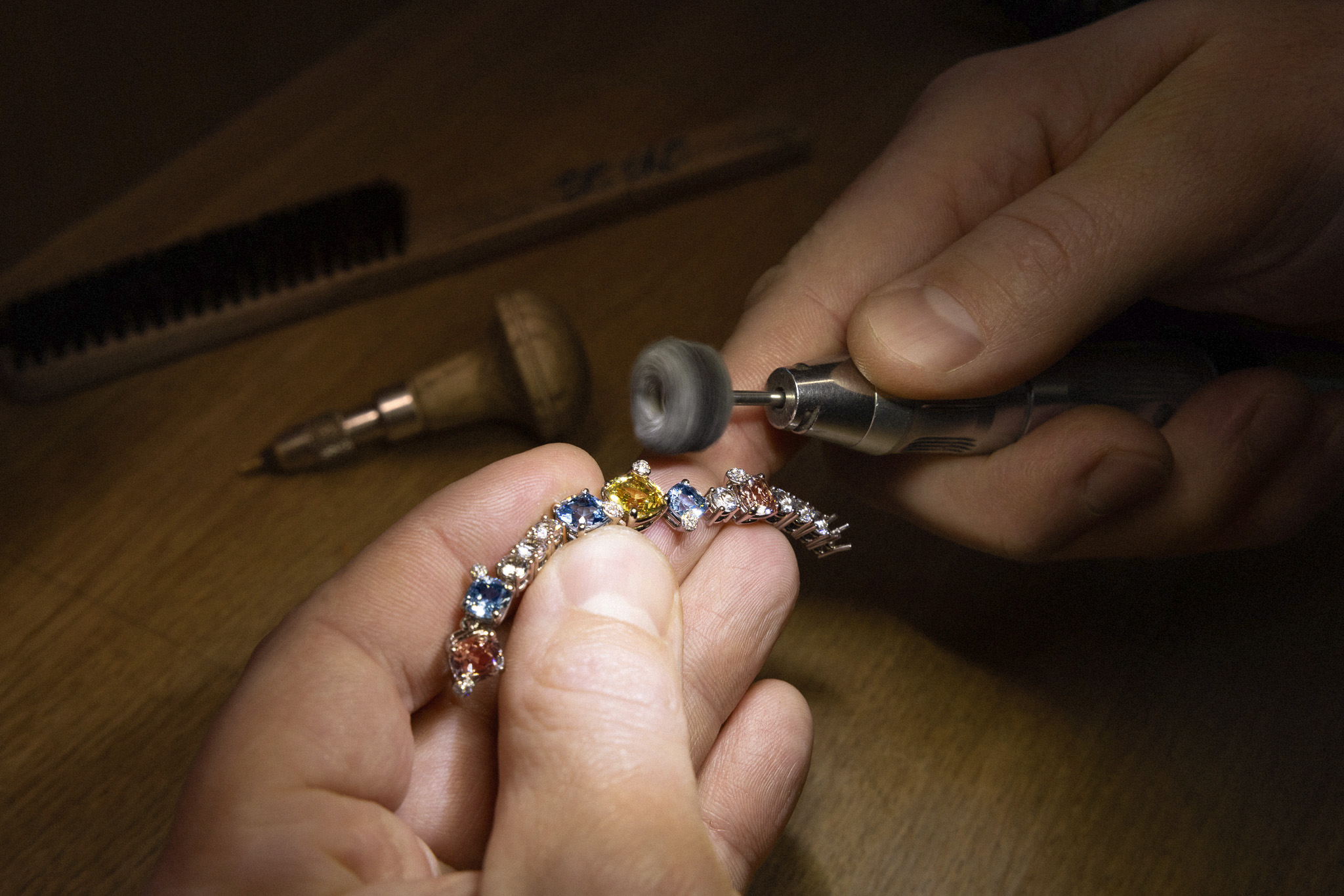
Rare Minerals Under Pressure
How Gemstones Form
The formation of gemstones is a process that spans millions of years. Subjected to extreme heat and pressure, minerals deep within the Earth crystallise, giving gemstones unique hues, patterns, and remarkable characteristics.
These natural wonders emerge from minerals trapped in the Earth's depths. More than 100 kilometres beneath the surface, atoms align under immense pressure, forming perfectly symmetrical crystal structures. This process gives gemstones their exceptional hardness and purity, ensuring a consistent chemical composition. Diamonds, rubies, sapphires, and topaz originate in this way.
Emeralds and garnets, on the other hand, are formed when the temperature and pressure in existing layers of rock change and, therefore, also the structure of the mineral compounds. Meanwhile, turquoise, opal, and malachite arise through the evaporation of mineral-rich solutions. Regardless of their origin, gemstones reach the Earth's surface through volcanic activity, where they can be mined.
Gemstones are extracted from underground or surface mines and riverbeds, depending on their geological formation. After mining, they must be carefully separated from surrounding rock and impurities. Only then can their type, colour, size, and clarity be assessed, determining the most suitable cut to bring out their finest qualities.
Before a raw gemstone becomes a brilliant jewel set in a piece of fine jewellery, it undergoes a meticulous process:
Pre-cutting: Understanding the stone's natural inclusions and fracture lines is essential to prevent breakage and ensure a flawless result.
Ebouching: The gemstone is roughly shaped, preparing it for the cutting process.
Faceting: In this step, the gemstone is brought into its final shape. Skilled artisans create precise facets, allowing the stone to reflect and refract light beautifully. The more refined the facets, the greater the gemstone's brilliance.
Polishing: The final step that perfects the stone's surface, enhancing its radiance and bringing out its natural splendour.
What Minerals Are Gemstones Made Of?
Each gemstone's unique mineral composition defines its colour, structure, and rarity. Rubies and sapphires belong to the corundum family, valued for their vivid red and deep blue hues. Emeralds, renowned for their rich green tones, are part of the beryl family. Beyond these classics, amethysts, aquamarines, and opals play an important role in fine jewellery.
Some of the most well-known gemstones and their mineral compositions include:
Rubies and Sapphires are composed of aluminium oxide, with traces of chromium creating ruby's signature red, while different trace elements give sapphires their variety of colours.
Emeralds and Aquamarines belong to the beryl group, with emeralds deriving their green from chromium and vanadium, while aquamarines owe their blue hue to traces of iron.
Opals consist of silicon dioxide with varying water content; their mesmerising play of colour is due to microscopic silica spheres.
Tanzanite is a variety of calcium-aluminium silicate with traces of vanadium that create its striking blue hue.
Tourmalines: Complex borosilicates that occur in a range of colours depending on the presence of elements such as aluminium, iron, sodium, lithium, and boron.
The precise chemical composition and structure of a gemstone influence its colour, hardness, and other defining characteristics. This diversity gives each gemstone its unique personality and appeal.
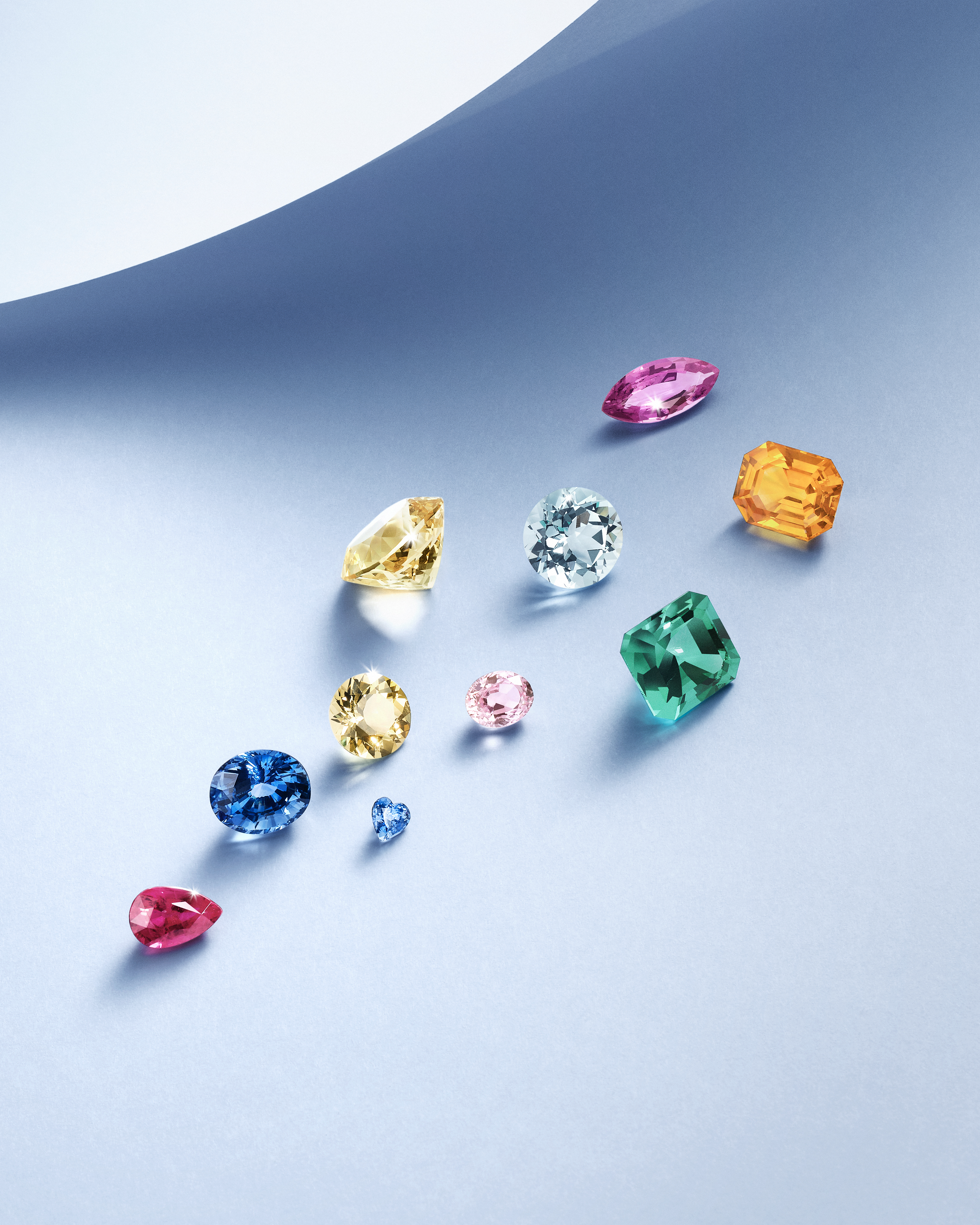
Princess, Cushion, and Heart
The Art of Gemstone Cutting
Transforming a gemstone into a jewellery masterpiece requires expertise, precision, and years of experience. A stone's brilliance is revealed through expertly cut facets that enhance its interaction with light. The choice of cut plays a crucial role in maximising its beauty. Various cutting and polishing techniques accentuate a gemstone's finest characteristics, with some of the most renowned cuts including:
Princess Cut: A modern favourite, typically square or rectangular with sharp, uncut corners and 57 or 76 facets, designed for maximum brilliance.
Emerald Cut: Originally developed for emeralds, this cut features step-like facets and a large table, emphasising clarity and depth.
Cushion Cut: Known for its soft, rounded edges and larger facets, this cut enhances the brilliance of rubies, sapphires, and emeralds.
Marquise-Cut: Named after the Marquise de Pompadour, its elongated shape and pointed ends create the illusion of a larger stone.
Heart Cut: A demanding cut requiring perfect symmetry, often chosen for pendants, earrings, and sentimental pieces.
Cabochon Cut: One of the oldest cutting styles, this smooth, domed finish highlights the depth of opaque gemstones and unique features such as the star effect.


Gemstones vs. Semi-Precious Stone
What's the Difference?
While gemstones such as rubies, sapphires, and emeralds are highly prized for their clarity and rarity, semi-precious stones like lapis lazuli, tourmaline, quartz, amethyst, and agate have a different composition.
The key distinction lies in their crystalline structure and purity. Semi-precious stones tend to have a less uniform structure, greater opacity, and are more commonly found, making them less rare and valuable than true gemstones.
What Determines a Gemstone's Value?
Four essential factors define the value of a gemstone:
Colour: For white diamonds, the absence of yellow tint enhances value, while in coloured diamonds, rubies, sapphires, and emeralds, intensity and purity are essential.
Clarity: Measured by the presence of natural inclusions, higher clarity enhances a gemstone's rarity and worth.
Carat Weight: Gemstones of significant size are rarer, making larger stones more valuable.
Cut: A precise cut maximises brilliance and intensifies the colour. It can significantly increase the gemstone's value and determine the colour's intensity. When cutting, the direction of the crystal structure with the most beautiful colour is considered, thus controlling the colour intensity. At Bucherer Fine Jewellery, the optimal visual impact is prioritised over carat weight to ensure exceptional beauty.
Origin: A gemstone's provenance can influence its value, with certain mines or regions commanding higher recognition for their quality and rarity.
Ultimately, each gemstone carries its own character, resonating on a personal level that enhances its value beyond measure.