The Evolution
Omega Speedmaster
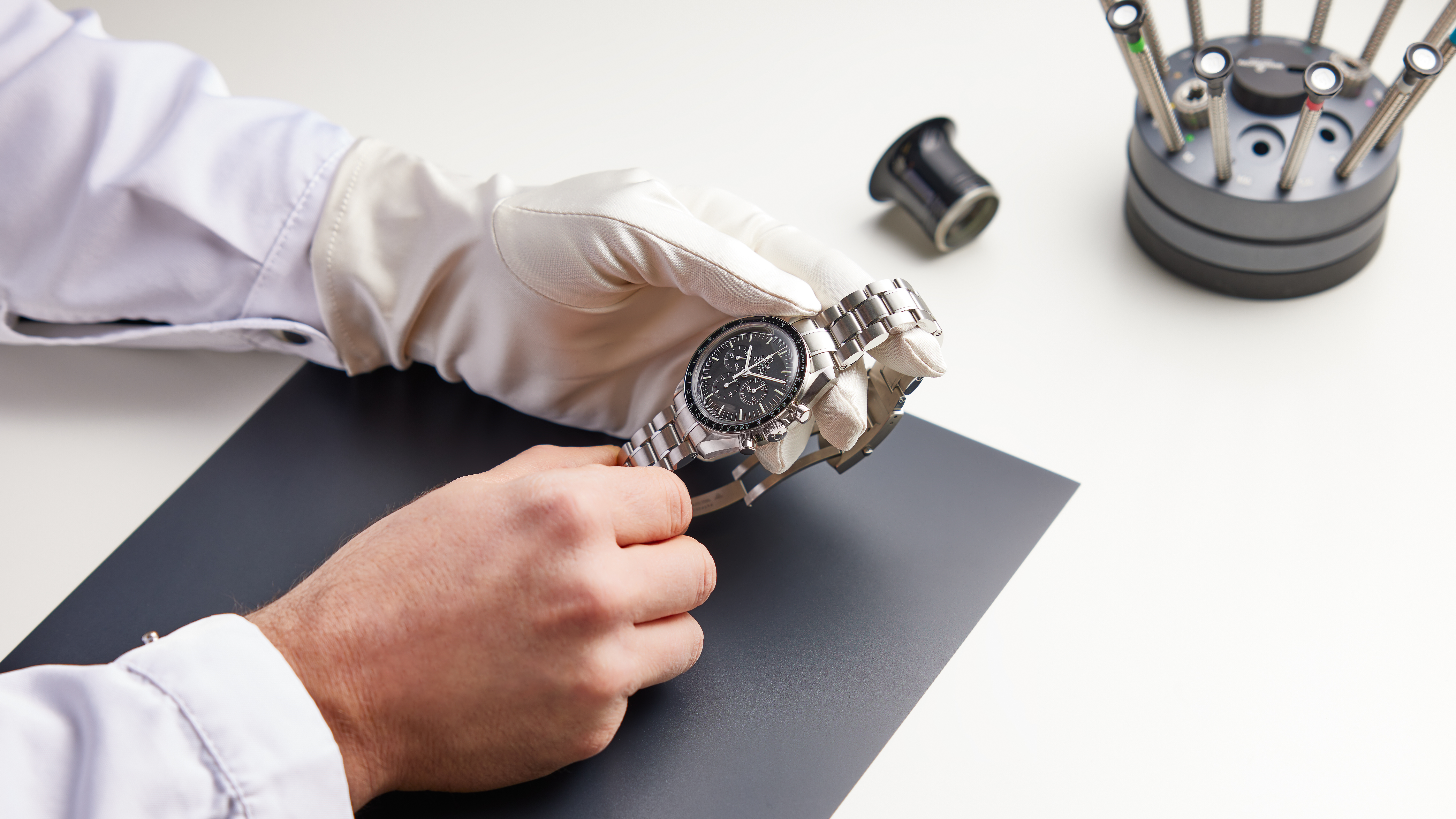
The Speedmaster started life in the late 1950s as a tool watch for timing laps on racetracks. Omega’s goal was simple: a chronograph that could be counted on, lap after lap, under real conditions. That practicality quickly found a new stage. Within a few years, the watch was under scrutiny by NASA. Engineers subjected it to vibration, sudden pressure changes, and temperatures far outside what most wristwatches would face. It passed those tests, proving its worth not only on asphalt but beyond Earth. Across six decades, the Speedmaster has evolved, but not reinvented itself. Each model tells a story of function, engineering, and careful refinement.
5 Minutter

1965-1967
The Last of the Straight Lugs
Ref. 105.003‑65
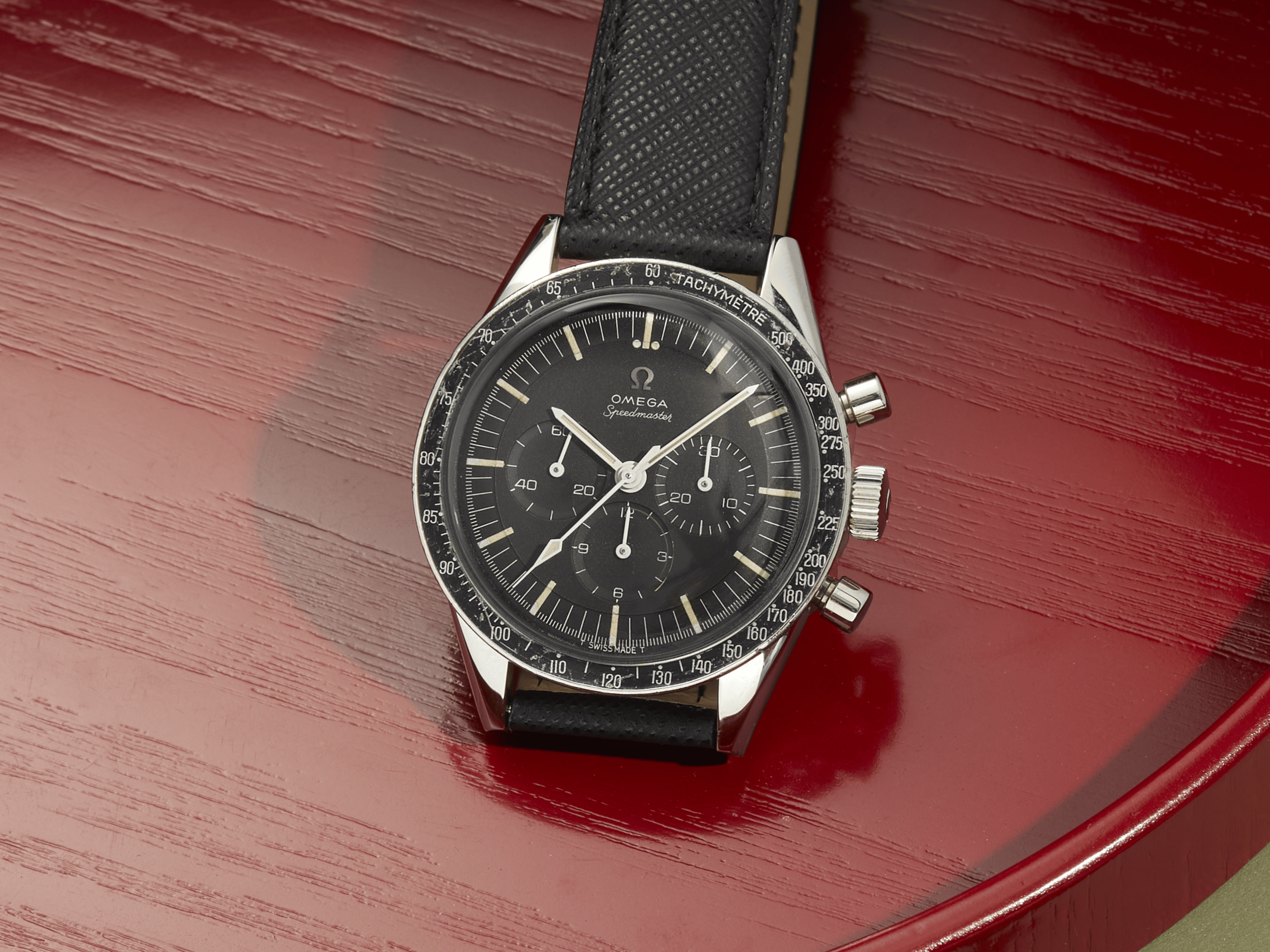
By 1965, the world was looking skyward as space travel had captured the imagination of a generation. Be it through design, cars, furniture, or watches, space as a concept was an obsession. Omega’s Speedmaster was already on that trajectory. The reference 105.003‑65, later dubbed the “Ed White,” after the American astronaut who wore it on the first spacewalk, marked the end of the straight-lug case. Inside is the manual-wound Calibre 321, a column-wheel chronograph movement capable of withstanding extremes no civilian timepiece could including including rapid accelerations and vacuum conditions. During NASA’s rigorous qualification tests, it outperformed contemporaries, thus setting the benchmark. As such, the 105.003 became the first Speedmaster certified for all manned space missions, and laid the foundations for the future trajectory.
1967-1968
The Moonwatch’s Defining Moment
Ref. 145.012
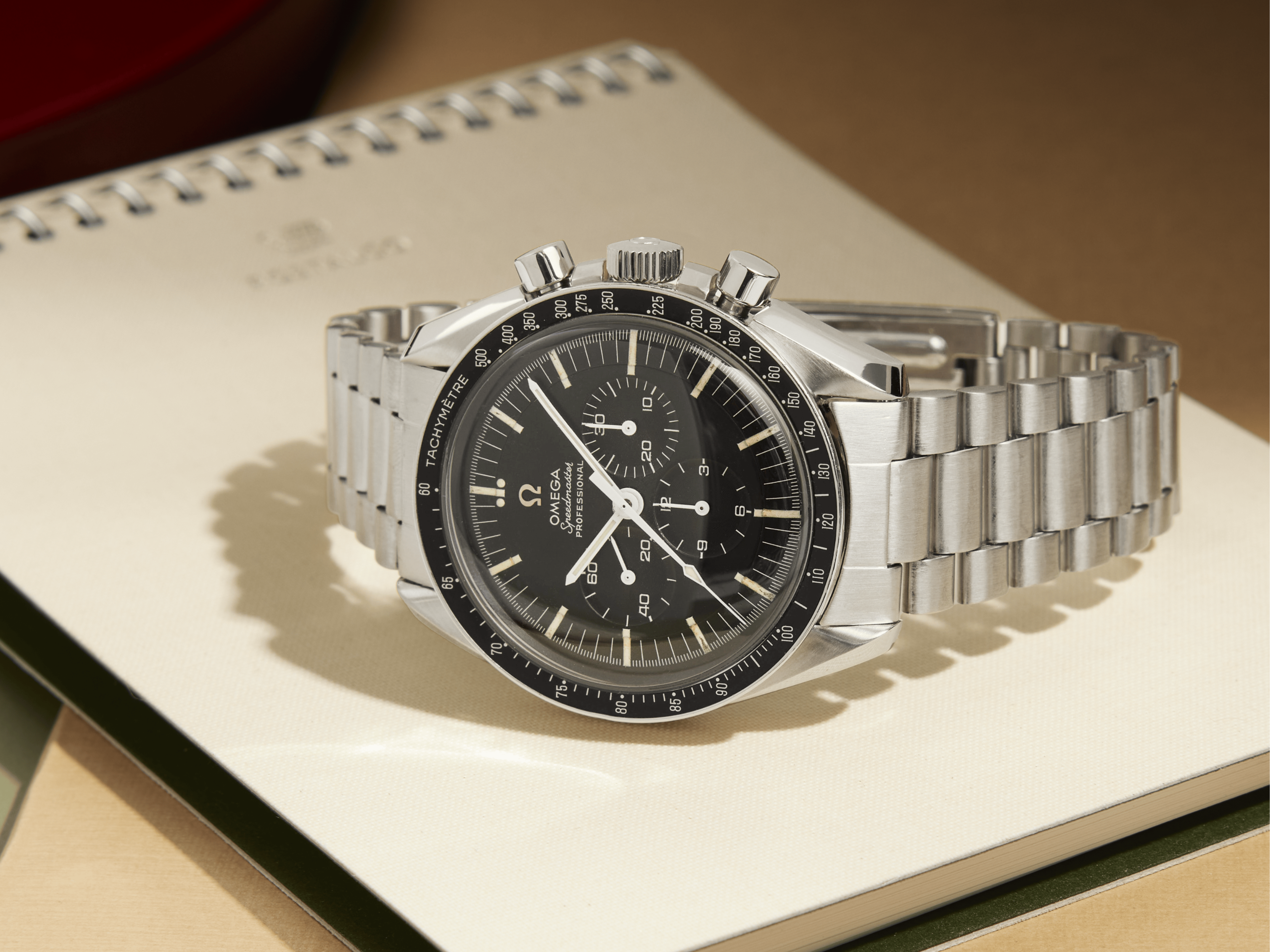
The 145.012 is the watch that many picture when they think “Speedmaster.” After all, it's the reference that accompanied Neil Armstrong and Buzz Aldrin to the Moon. Produced between 1967 and 1968, it’s the last 321-powered reference before the shift to the 861 and remains the Speedmaster worn by more astronauts than any other. Being “prepared for space” meant more than surviving launch vibrations. The dial had to remain legible in low light and under glare. The chronograph needed reliable, repeatable timing to track critical mission events. The movement was built to handle rapid pressure changes, temperature swings from intense sunlight to shadow, and zero gravity, which affects how lubricants behave. Every feature, from the winding crown to the pushers, was designed or tested to function perfectly under these harsh conditions, with gloves worn by the astronauts. It was a watch astronauts could rely on when timing manoeuvres, experiments, or re-entry procedures, where mistakes were not an option.
With this generation, the case evolved into the asymmetrical form with a distinct profile defined by the lyre lugs for additional protection. The pushers are slightly taller and more pronounced for glove-friendly operation, while the legendary manual-wound Calibre 321 is inside. The matte black dial, hesalite crystal, and tritium markers were choices dictated by function. Where the 105.003 was an audition, the 145.012 was the defining performance, as it's a reference that closes one chapter of Speedmaster history and opens another, acting as the custodian of the DNA that still defines the collection today.
1968-1988
The Calibre 861 Era
Ref. 145.022
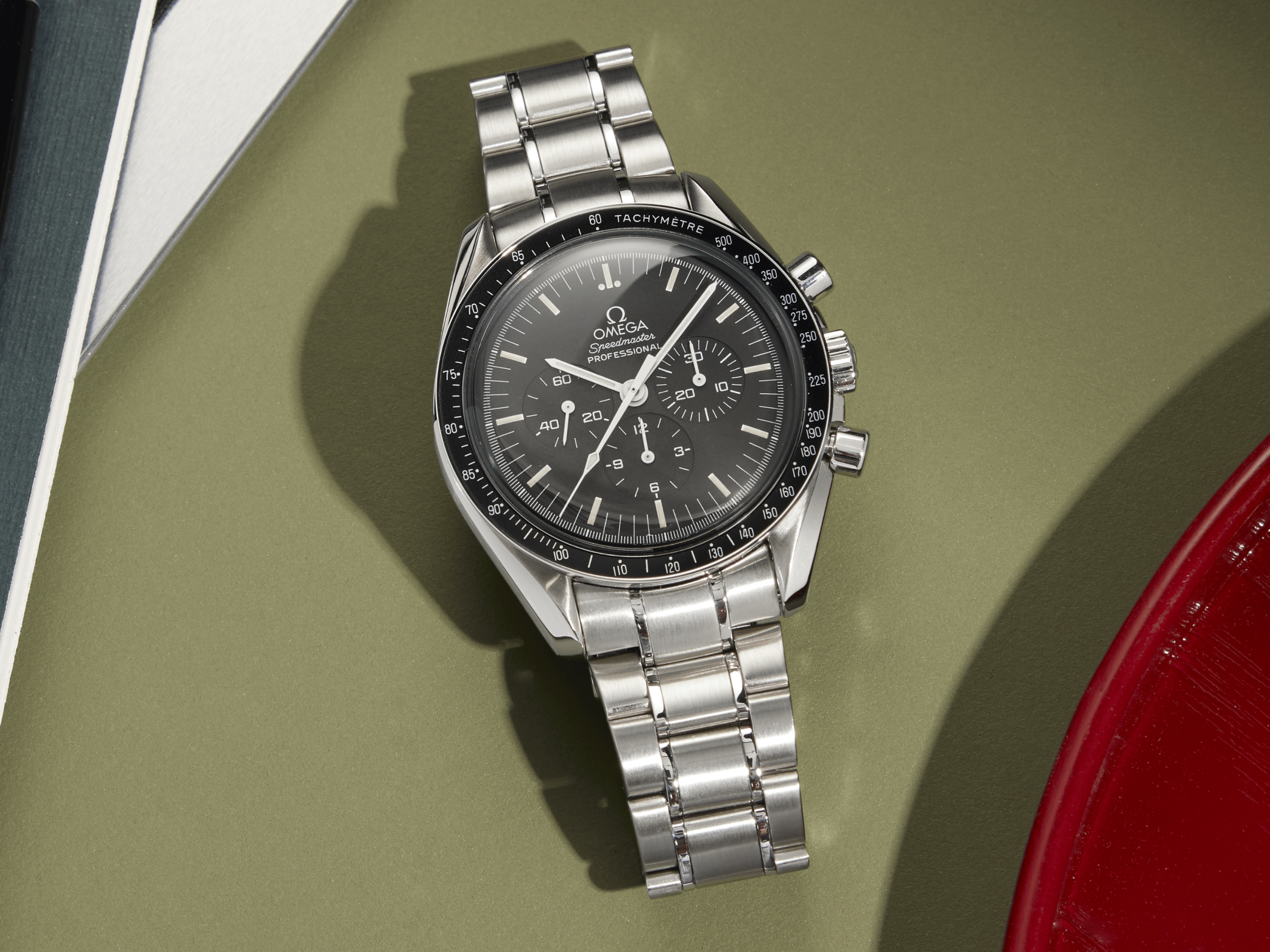
The 145.022 was first introduced in 1968 and persisted into the late 1980s, and it remains perhaps the best embodiment of the Speedmaster’s endurance. It debuted the manual-wound Calibre 861, replacing the column-wheel with a cam-actuated system that preserved accuracy and reliability. Instead of a column-wheel controlling the start, stop, and reset functions, a series of cams and levers handled the tasks. This change made the movement simpler, easier to service, and more consistent over time while still keeping the chronograph accurate and reliable. While there is some mourning for the romance of the 321 era, what replaced it was something which delivered more modernity through industrial consistency, resulting in a durable and understated watch. By 1989, the 145.022 had become the longest-running Speedmaster reference.
1997-2009
The Professional Standard
Ref. 3570.50.00
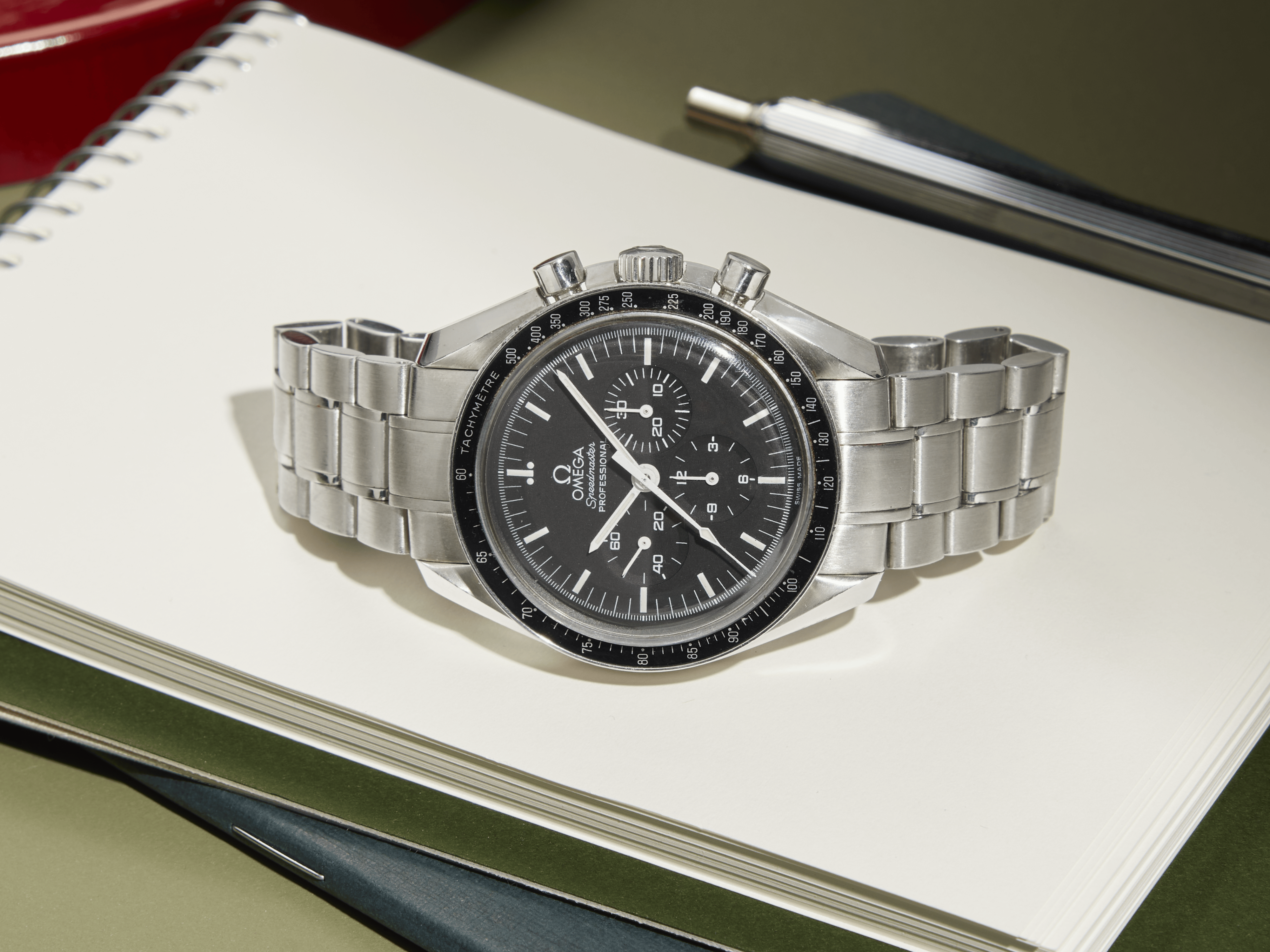
By the time the 2000s had arrived, the Speedmaster Professional had become a touchstone among chronographs. The 3570.50.00 refined what is commonly referenced as a ‘Moonwatch’, the Speedmaster variant certified by NASA for manned space missions and worn on the lunar surface. Not all Speedmasters are Moonwatches as the designation is reserved for those with that heritage and flight qualification.
The 3570.50.00 stayed true to its roots, maintaining the 42 mm asymmetrical case, hesalite crystal, and NASA flight-qualification engravings. Inside sits the manual-wound Calibre 1861, an evolution of the 861 that preserves the Moonwatch's familiar feel while improving reliability. The watch balances heritage with everyday usability, remaining tactile, functional, and historically resonant. The 3570.50.00 is a reminder that the Speedmaster was always, first and foremost, a tool to be used rather than simply admired.
Speedmaster
All Speedmasters by Omega are chronographs, but the name itself refers to the wider collection which includes various models with different case sizes, movements, materials, and purposes. Many Speedmasters were never intended for spaceflight and were not submitted for NASA testing, such as the Speedmaster Racing or the Speedmaster Reduced collections.
Professional
Only Speedmasters that were flight-qualified by NASA for manned space missions are permitted to carry the word “Professional” on the dial. This designation signifies that the watch passed rigorous testing for shock, vibration, temperature extremes, and reliability in zero gravity. The use of the Professional name is therefore a functional and historical marker, not a stylistic one.
Moonwatch
The use of“Moonwatch” is not an official Omega designation but a nickname colloquially given to watches by collectors. Its use refers specifically to the classic 42mm, black dial, steel Speedmaster Professional, also known as the configuration worn during the Apollo missions and on the lunar surface. While all Moonwatches are Speedmaster Professionals, not all Speedmaster Professionals are considered Moonwatches by collectors.
2021-Present
A Modern Classic
Ref. 310.30.42.50.01.001
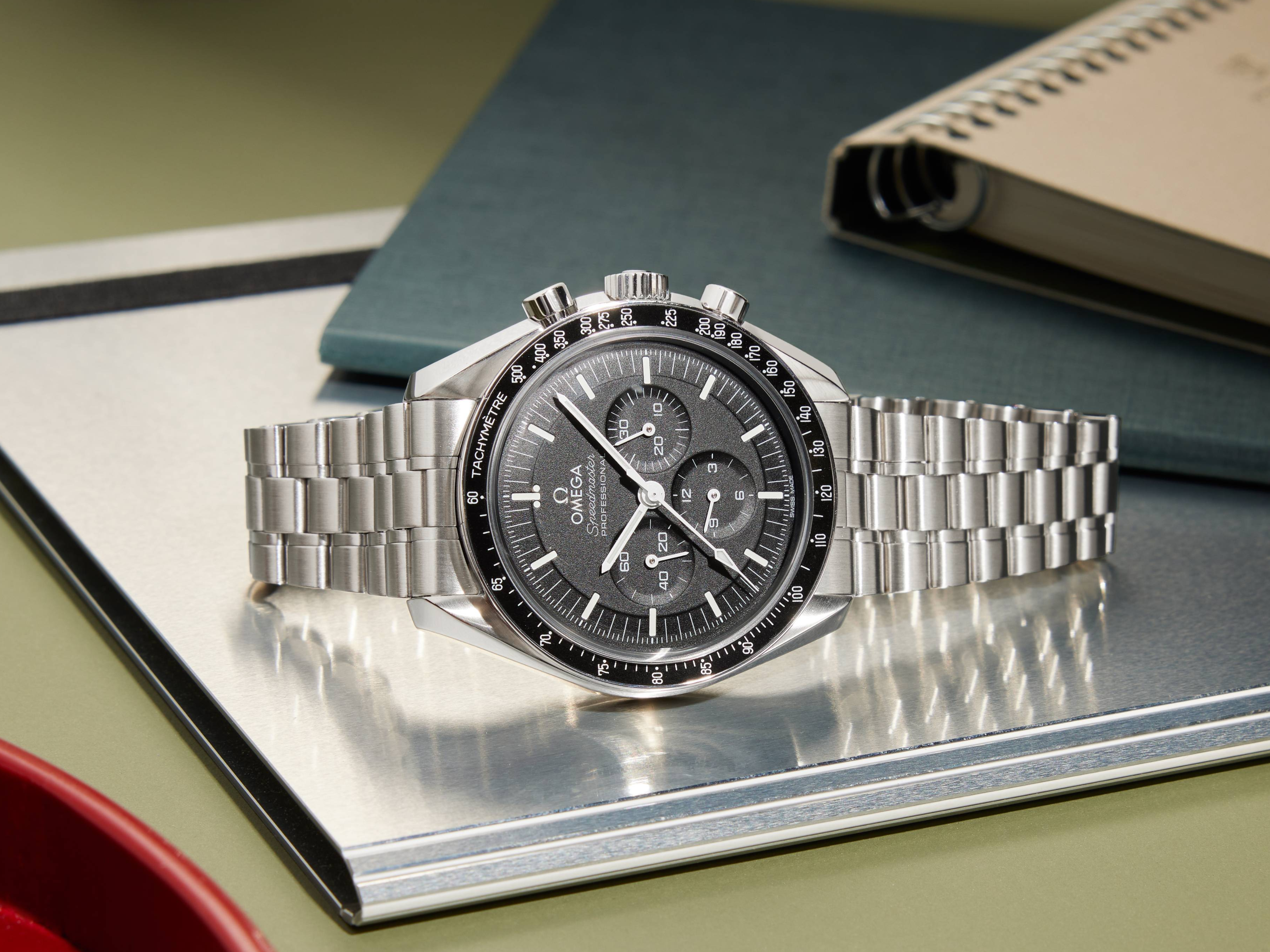
The 310.30.42.50.01.001 is the latest iteration to carry the Speedmaster into the modern era, and its design draws from the fourth-generation Moonwatch, the ST 105.012, nodding to Apollo 11 with a step dial, period-correct bezel font with dot over 90, and a tapering bracelet. Under the surface is the manual-wound Calibre 3861, a Master Chronometer-certified movement which adds anti-magnetic properties and a legendary co-axial escapement. Case dimensions remain 42 mm in diameter with a thickness of around 13.5 mm, which is slightly thinner than previous 1861-era references. Tradition and technical refinement coexist here.
The Speedmaster is defined by continuity, not constant novelty. Each generation preserves the essential purpose: to perform reliably in any environment. What sets these watches apart is not only their engineering but also the moments they’ve witnessed and the people who relied on them. From racetracks to lunar landings, the Speedmaster has been present when precision mattered most, linking human endeavour with mechanical excellence.
These watches capture the spirit of their era, the optimism of the Space Age, the discipline of exploration, and the confidence of a tool watch built to endure. They set a standard because they work without compromise and remain instantly recognisable, a design that communicates reliability and purpose at a glance. The Speedmaster’s legacy is as much about the stories it has accompanied as the mechanics it houses. It remains relevant not because it chases culture but because it exemplifies what a chronograph can achieve when function, history, and human ambition intersect.